
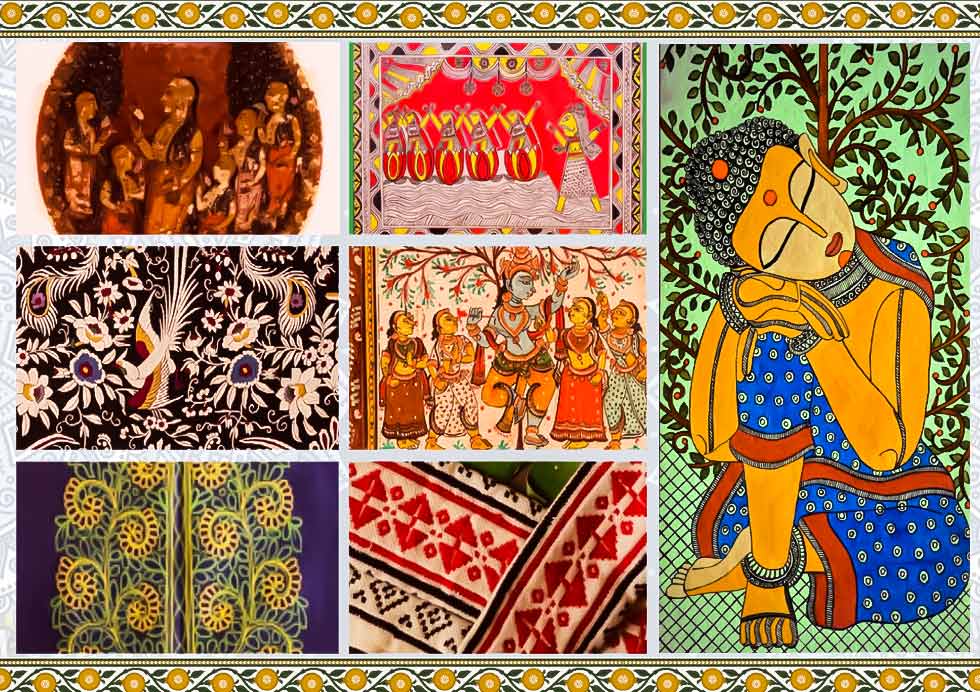

1. Madhubani Art (Mithila Painting)
Originating from Bihar, Madhubani art is known for its intricate patterns and vibrant colors. Traditionally created by women, these paintings depict nature, mythology, religious themes, and social events. The art form uses natural dyes and pigments, with motifs like peacocks, fish, flowers, and gods.
2. Warli Art
Warli painting is a tribal art form from Maharashtra. Characterized by simple, geometric shapes, it uses white paint on mud walls to depict daily life, nature, animals, and humans in a rhythmic, almost symbolic way. The paintings are often created in a monochromatic style, focusing on patterns and motifs.
3. Tanjore Painting
Originating from Tamil Nadu, Tanjore paintings are known for their rich colors, surface richness, compact composition, and surface richness. Traditionally depicting deities, these paintings are embellished with gold foil, giving them a distinctive, luxurious appearance.
4. Pattachitra
This traditional art form hails from Odisha and West Bengal. Pattachitra paintings are known for their intricate patterns and storytelling technique. These paintings are often on cloth or dried palm leaves, and their subjects often revolve around Hindu deities, mythological tales, and epics like the Ramayana and Mahabharata.
5. Miniature Painting
Miniature paintings developed during the Mughal era and later flourished in regional styles like Rajput, Mughal, Pahari, and Deccan. Known for their exquisite detailing, these paintings were often done on paper or ivory and depicted court scenes, royal portraits, and religious themes.
6. Kalamezhuthu
A ritualistic art form from Kerala, Kalamezhuthu is practiced during temple festivals. It involves creating intricate designs on the ground using colored powders. These drawings are usually representations of gods, goddesses, and mythological figures and are meant to invoke divine blessings.
7. Folk Art and Tribal Art
India has a wide array of folk and tribal art, with each region having its unique style. For example, the Madhya Pradesh tribe of Gond people produces art based on stories and nature. Pithora paintings from Gujarat, Kalamkari from Andhra Pradesh, and Chittara paintings from Karnataka are some examples of tribal artwork that are known for their symbolism and connection to spirituality.
8. Block Printing
Common in Rajasthan and Gujarat, block printing is an ancient technique of printing patterns onto fabric using hand-carved wooden blocks. The designs can range from floral motifs to geometric patterns. The most famous styles include Bagru, Sanganeri, and Ajrakh.
9. Rajasthani Art
Rajasthan has a rich tradition of painting, architecture, and folk art. Known for its Phad paintings, Pichwai paintings, and Mural art, Rajasthani art is deeply influenced by religious themes, particularly those surrounding Lord Krishna, and vibrant desert landscapes.
10. Kalamkari
Kalamkari is a traditional Indian art form that involves hand-painting or block-printing on fabric or paper using natural dyes. It originates from Andhra Pradesh and Telangana, and the artwork usually depicts mythological themes, especially from Hindu epics like the Ramayana and Mahabharata.
11. Sikh Art (Gurmat Art)
Originating from the Sikh religious tradition, Sikh art includes intricate depictions of Sikh Gurus, historical events, and religious symbols. The art form typically uses bright colors and incorporates elements like the Khanda (Sikh sword) and the Nishan Sahib (Sikh flag).
12. Glass Painting
This form of art, often practiced in Kerala and other South Indian states, involves painting on glass with vivid colors to create a stunning, almost transparent look. These paintings are typically religious in nature and are often displayed in homes and temples.
13. Stone Carving
India is known for its ancient tradition of stone carving, as seen in the temples of Khajuraho, Hampi, and Ellora. The sculptures, often intricate and detailed, depict deities, animals, and royal figures. These carvings can be seen on temple walls, pillars, and even in free-standing statues.
14. Mughal Art and Architecture
Emerging during the reign of the Mughal emperors in India, Mughal art is a blend of Persian, Turkish, and Indian styles. This includes exquisite miniature paintings, calligraphy, and architectural designs. Famous examples are the Taj Mahal, Fatehpur Sikri, and the Mughal miniature paintings of court life and nature.
15. Metal Art (Bronze and Brass)
The art of creating sculptures and utensils from bronze and brass has been a hallmark of Indian craftsmanship for centuries. The bronze idols of Tamil Nadu, brass lamps from Kerala, and Ponduru metal work from Andhra Pradesh are among the finest examples.
16. Terracotta Art
In many parts of India, terracotta is used to create sculptures, figurines, and pottery. The terracotta figurines of Bengal and the temples of the Terracotta art from West Bengal show the extensive use of this medium in representing gods, goddesses, and animals.
17. Channapatna (Lacware)
Originating from Karnataka, Channapatna art involves making wooden toys and decorative items, which are then colored with bright lacquers. The tradition is thought to have been introduced by Persian artisans and has evolved into a globally recognized craft.
18. Textile Arts (Silk Weaving, Embroidery)
India’s textile heritage is vast, with various regions excelling in different types of fabric and embroidery. The Kashmiri Pashmina, Banarasi silk, Kanjivaram saris, and Chikan embroidery from Lucknow are among the most renowned textiles produced in India, combining intricate patterns, fine threads, and a rich cultural history.
19. Rangoli/ Kolam
Rangoli (or Kolam in South India) is a traditional form of decoration done with colored powders, rice, or flower petals on the ground. It is often made during festivals or auspicious occasions and is symbolic of prosperity and happiness.
20. Theater and Performance Art (Kathakali, Bharatnatyam, Kathak)
Indian classical dance forms, such as Kathakali, Bharatanatyam, and Kathak, are also considered art forms. These dances are deeply symbolic, narrating stories through expressive movements, facial expressions, and intricate footwork, and often accompanied by traditional music.
Each of these art forms represents not just an aesthetic tradition but a cultural identity, linking generations and preserving history in the most beautiful and imaginative ways. Whether through painting, sculpture, dance, or textiles, Indian art continues to be a reflection of the country’s diversity and rich heritage.
Incredible India
1. Madhubani Art (Mithila Painting)
Originating from Bihar, Madhubani art is known for its intricate patterns and vibrant colors. Traditionally created by women, these paintings depict nature, mythology, religious themes, and social events. The art form uses natural dyes and pigments, with motifs like peacocks, fish, flowers, and gods.
2. Warli Art
Warli painting is a tribal art form from Maharashtra. Characterized by simple, geometric shapes, it uses white paint on mud walls to depict daily life, nature, animals, and humans in a rhythmic, almost symbolic way. The paintings are often created in a monochromatic style, focusing on patterns and motifs.
3. Tanjore Painting
Originating from Tamil Nadu, Tanjore paintings are known for their rich colors, surface richness, compact composition, and surface richness. Traditionally depicting deities, these paintings are embellished with gold foil, giving them a distinctive, luxurious appearance.
4. Pattachitra
This traditional art form hails from Odisha and West Bengal. Pattachitra paintings are known for their intricate patterns and storytelling technique. These paintings are often on cloth or dried palm leaves, and their subjects often revolve around Hindu deities, mythological tales, and epics like the Ramayana and Mahabharata.
5. Miniature Painting
Miniature paintings developed during the Mughal era and later flourished in regional styles like Rajput, Mughal, Pahari, and Deccan. Known for their exquisite detailing, these paintings were often done on paper or ivory and depicted court scenes, royal portraits, and religious themes.
6. Kalamezhuthu
A ritualistic art form from Kerala, Kalamezhuthu is practiced during temple festivals. It involves creating intricate designs on the ground using colored powders. These drawings are usually representations of gods, goddesses, and mythological figures and are meant to invoke divine blessings.
7. Folk Art and Tribal Art
India has a wide array of folk and tribal art, with each region having its unique style. For example, the Madhya Pradesh tribe of Gond people produces art based on stories and nature. Pithora paintings from Gujarat, Kalamkari from Andhra Pradesh, and Chittara paintings from Karnataka are some examples of tribal artwork that are known for their symbolism and connection to spirituality.
8. Block Printing
Common in Rajasthan and Gujarat, block printing is an ancient technique of printing patterns onto fabric using hand-carved wooden blocks. The designs can range from floral motifs to geometric patterns. The most famous styles include Bagru, Sanganeri, and Ajrakh.
9. Rajasthani Art
Rajasthan has a rich tradition of painting, architecture, and folk art. Known for its Phad paintings, Pichwai paintings, and Mural art, Rajasthani art is deeply influenced by religious themes, particularly those surrounding Lord Krishna, and vibrant desert landscapes.
10. Kalamkari
Kalamkari is a traditional Indian art form that involves hand-painting or block-printing on fabric or paper using natural dyes. It originates from Andhra Pradesh and Telangana, and the artwork usually depicts mythological themes, especially from Hindu epics like the Ramayana and Mahabharata.
11. Sikh Art (Gurmat Art)
Originating from the Sikh religious tradition, Sikh art includes intricate depictions of Sikh Gurus, historical events, and religious symbols. The art form typically uses bright colors and incorporates elements like the Khanda (Sikh sword) and the Nishan Sahib (Sikh flag).
12. Glass Painting
This form of art, often practiced in Kerala and other South Indian states, involves painting on glass with vivid colors to create a stunning, almost transparent look. These paintings are typically religious in nature and are often displayed in homes and temples.
13. Stone Carving
India is known for its ancient tradition of stone carving, as seen in the temples of Khajuraho, Hampi, and Ellora. The sculptures, often intricate and detailed, depict deities, animals, and royal figures. These carvings can be seen on temple walls, pillars, and even in free-standing statues.
14. Mughal Art and Architecture
Emerging during the reign of the Mughal emperors in India, Mughal art is a blend of Persian, Turkish, and Indian styles. This includes exquisite miniature paintings, calligraphy, and architectural designs. Famous examples are the Taj Mahal, Fatehpur Sikri, and the Mughal miniature paintings of court life and nature.
15. Metal Art (Bronze and Brass)
The art of creating sculptures and utensils from bronze and brass has been a hallmark of Indian craftsmanship for centuries. The bronze idols of Tamil Nadu, brass lamps from Kerala, and Ponduru metal work from Andhra Pradesh are among the finest examples.
16. Terracotta Art
In many parts of India, terracotta is used to create sculptures, figurines, and pottery. The terracotta figurines of Bengal and the temples of the Terracotta art from West Bengal show the extensive use of this medium in representing gods, goddesses, and animals.
17. Channapatna (Lacware)
Originating from Karnataka, Channapatna art involves making wooden toys and decorative items, which are then colored with bright lacquers. The tradition is thought to have been introduced by Persian artisans and has evolved into a globally recognized craft.
18. Textile Arts (Silk Weaving, Embroidery)
India’s textile heritage is vast, with various regions excelling in different types of fabric and embroidery. The Kashmiri Pashmina, Banarasi silk, Kanjivaram saris, and Chikan embroidery from Lucknow are among the most renowned textiles produced in India, combining intricate patterns, fine threads, and a rich cultural history.
19. Rangoli/ Kolam
Rangoli (or Kolam in South India) is a traditional form of decoration done with colored powders, rice, or flower petals on the ground. It is often made during festivals or auspicious occasions and is symbolic of prosperity and happiness.
20. Theater and Performance Art (Kathakali, Bharatnatyam, Kathak)
Indian classical dance forms, such as Kathakali, Bharatanatyam, and Kathak, are also considered art forms. These dances are deeply symbolic, narrating stories through expressive movements, facial expressions, and intricate footwork, and often accompanied by traditional music.
Each of these art forms represents not just an aesthetic tradition but a cultural identity, linking generations and preserving history in the most beautiful and imaginative ways. Whether through painting, sculpture, dance, or textiles, Indian art continues to be a reflection of the country’s diversity and rich heritage.
Incredible India